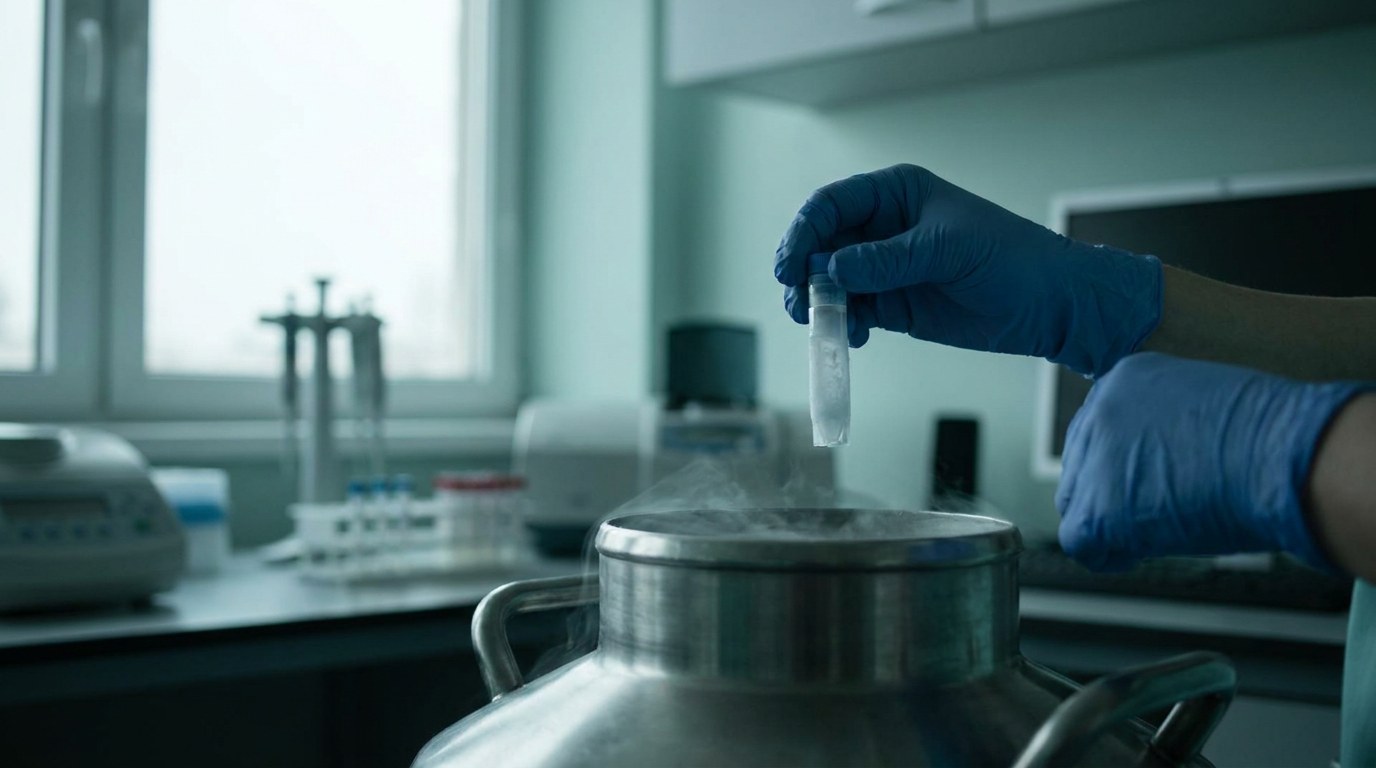
In Turner syndrome the loss of eggs does not begin in adolescence: germ cells start running out during fetal life. So when a family hears the diagnosis for a girl, one of the first questions is whether reproductive material should be stored before it is too late. The answer, according to a review published in Frontiers in Endocrinology, is that both available techniques are technically feasible and procedurally safe, but nobody has yet shown that frozen material ends in a pregnancy.
What is known about fertility preservation in girls comes mostly from paediatric oncology cohorts, where the urgency is to protect the ovarian reserve from chemotherapy. That model is now being carried over to non-cancer conditions that threaten fertility, including differences of sex development (DSD). Within that group, Turner syndrome is the condition with the most clinical experience. The review goes through the two routes in use: ovarian tissue cryopreservation, in which tissue is collected by laparoscopy and can be stored even before puberty, and oocyte cryopreservation, which depends on maturing and retrieving eggs.
The available data support the technical feasibility and the general safety of both procedures. What does not exist is a rule that predicts which girls will benefit. The review points to several features associated with finding follicles in the tissue or with successfully retrieving oocytes: a 46,XX cell line, spontaneous pubertal development, a detectable anti-Müllerian hormone and lower FSH concentrations. They are signs of residual ovarian function, not a promise of success, and they match the mosaic cases in which some cells keep two intact X chromosomes.
The uncomfortable part is the outcome. Evidence on the use of stored material, on pregnancies and on live births is still very limited, and the reproductive effectiveness of fertility preservation in Turner syndrome has not been established. In other words, freezing can be offered today, but a child cannot be promised. That gap between an available procedure and a proven result belongs at the centre of the conversation with families, and it is also the reason to avoid upbeat messages the evidence does not support.
The review adds something that is often missing from the fertility consultation: the heart. Before a pregnancy is considered in a woman with Turner syndrome, cardiovascular eligibility and the associated obstetric risks have to be assessed, because the aorta and the rest of the cardiovascular system shape the safety of pregnancy as much as the ovarian reserve does. Until long-term follow-up data arrive, the authors argue for individualised patient selection and multidisciplinary counselling, with realistic expectations about benefits, limits and uncertainties. The experience gathered in Turner syndrome, they conclude, can also help organise reproductive care in other DSD conditions.
Source: Fertility preservation in girls and adolescents with Turner syndrome: lessons for reproductive care in differences of sex development – a mini-review. Kolesińska Z, Obara-Moszyńska M, Niedziela M, Kapczuk K. Frontiers in Endocrinology 2026;17:1918808. DOI: 10.3389/fendo.2026.1918808.
Read the publication: DOI 10.3389/fendo.2026.1918808 · PubMed 42877498